

two-state solution : ค้นหาหนังสือธรรมะ หน้า 55 / 67
หน้าหนังสือทั้งหมด
61
Exploring the Concept of Dhammakaya
First, as a *kammadhāra* compound, the translation of the term *dhammākāya* will be ‘the body that is transcendental (lokuttara) dhamma’ or ‘the body that is Nibbāna.’ This gives a similar sense as th
The term Dhammakaya can be viewed in two ways: as a kammadhāra compound translated to mean 'the body that is transcendental dhamma' or as a tappurisa compound meaning 'body pertaining to transcendenta
63
Understanding Paccekabuddhas in Buddhist Philosophy
V. Reference 2: Dhammakāya and Paccekabuddhas
A Paccekabuddha is counted as one of the two types of Buddhas. According to Buddhist philosophy, a Paccekabuddha is a person who is of the highest wisdom
This text discusses the concept of Paccekabuddhas, individuals of high wisdom who achieve self-enlightenment but lack the ability to teach. It explores scholarly arguments about the pre-Buddhist origi
66
Understanding Paccekabuddhas: Characteristics and Dhamma
These verses describe the Paccekabuddhas as ones possessed of supreme purity, wisdom, wakefulness, composure, and having the ability for seeing and knowing. In other words, they are full of realizing
These verses highlight the qualities of Paccekabuddhas, emphasizing their supreme purity, wisdom, and self-enlightenment capacity. The term ‘mahatadhamma’ refers to the great dhammas that relate to th
78
Understanding Dhammakāya in Early Theravādin Context
The research approach employed in the present study is intended as a more direct, analytical and inclusive one than previous approaches to this question. It is more direct in that it set off by docume
This study analyzes the term dhammakāya through close readings of Pali canonical passages, revealing that it relates not only to the Buddha but also to other noble figures like Paccakabuddhas and disc
90
Buddhist Manuscripts from Sipsong Panna Region
Buddhist manuscripts from the Sipsong Panna region can be divided into four categories. The first category consists of the Dai Pāli Tripiṭaka and Tripiṭaka commentary (三藏琢) which is represented by fiv
Buddhist manuscripts from the Sipsong Panna region are categorized into four main groups: the Dai Pāli Tripiṭaka and Tripiṭaka commentary, frequently used Pāli Canon texts, Theravāda Buddhist literatu
91
Exploration of Theravāda Buddhist Manuscripts in Sipsong Panna
literature.9 It is notable that the Agama Sutras (阿含经) discovered in the Xishuangbanna region are incomplete. For example, the Hinayana Agama should have contained the Khuddaka Patha (小品), Dharma-phra
The Agama Sutras found in the Xishuangbanna region are notable for their incompleteness. The Hinayana Agama is expected to contain various texts that are partly missing. According to The Complete Coll
94
Buddhist Manuscript Formats in Dai Region
Volume 98 Khuddaka-nikāya (小阿含经) and Volume 99 Majjhima-nikāya (中阿含经) are all in 5-line to 6-line format manuscripts; Volume 100 Digha-nikāya (长阿含经) is in 4-line to 5-line-format. The jäṭaka Wexiandal
Volume 98 Khuddaka-nikāya and Volume 99 Majjhima-nikāya are primarily in 5-6 line formats, while Volume 100 Digha-nikāya is formatted with 4-5 lines per page. The jäṭaka Wexiandala represents a key Bu
109
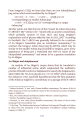
ความฉลาดในการรู้จักประโยชน์อย่างมีเหตุผลสู่การหลุดพ้นสูงสุด
พรเจ้าอุตตตริวิมาขัจิรมาณำณำพาวารกนา ดวยน: the wisdom of recognizing expedient toward the ultimate liberation is the two sublime ears of the Lord.
โลภิคยาลุกฺตรํณํImagine the figure of recognition the
บทความนี้พูดถึงความฉลาดในการรู้จักประโยชน์ไปสู่การหลุดพ้นสูงสุด โดยเปรียบเทียบองค์ประกอบต่างๆ ของความฉลาดในพระพุทธศาสนากับคุณลักษณะของพระเจ้าที่มีการเปรียบเทียบกับริมฝีปาก ดั้งฟัน และลิ้น ซึ่งแสดงถึงค
126
An Shigao's Influence on Anban Sutras
From Sengyou’s CSZJJ, we learn that there are two Anban[shouyi] jing sutras which were translated by An Shigao:37
安般守意經一卷 安錄云:『小安般經』。(CSZJJ p.5c 23: “corresponding to a Smaller Anban jing”
大安般經一卷(CSZJ
This content examines An Shigao's translations of Anban sutras, highlighting the distinctions between the Present Da Anban shouyi jing and the Kongo-ji Anban shouyi jing. The text discusses the integr
128
Understanding the Four Mahā-Bhūta in Buddhism
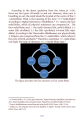
According to the above quotation from the Anban jie 安殘解, there are two types of breath: in and out. However, when one is breathing in-out, the mind should be located at the centre of the mahā-bhūta. W
根据安殘解的引用,有两种呼吸方式:吸气和呼气。然而,当进行呼吸时,心智应位于四大之中。四大是所有物质的组成部分,包括:土、 水、 火和风。根据上座部阿毗达摩,人的身体是由四大组成的,涉及生死循环,有时四大也代表元素的身体。有关四大元素的更深入的信息,请访问dmc.tv。
134
Exploring Daoist and Buddhist Visualization Techniques
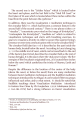
The second one is the "Golden Palace" which is located below the heart and spleen, and the last field is the "Mud Pill Court" or the Palace of Ni-wan which is located about three inches within the hea
The text discusses the Golden Palace and the Mud Pill Court in relation to Daoist meditation. It highlights the visualization techniques associated with the cinnabar field, emphasizing its significanc
32
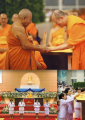
Ceremony of Recognition Among Monks
- The first image (top) shows two monks, one handing an award or plaque to the other, with other monks in the background.
- The second image (bottom left) depicts a formal event with a seated monk in
This content describes a set of images depicting a ceremonial event with monks. The first image portrays one monk awarding another, indicating a recognition of merit. The second image features a monk
14
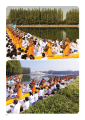
The image contains two photos of a large gathering of people, including monks dressed in orange robes and laypeople, seated by the water during what appears to be a religious or cultural event. There

103
การทำสมาธิเพื่อเข้าถึงธรรมภายใน
ดอกกัลวัลมีพิษพระผู้แจ้งนั่งขัดสมาธิอยู่ตรงกลาง และพระธะผู้รู้แจ้นนี้เอง
ท่านหมายอธรรมกาย
8. สรีมาภาวสีหนาวสุดร
กล่าวไวัชดเจาว่าธรรมภายในนั้นหาดเริ่มต้นไม่ได้ ไม่มีการเกิด ไม่มีการตาย ไม่ถึงซึ่งความ
เนื้อหานี้พูดถึงการทำสมาธิเพื่อเข้าถึงธรรมภายในที่บริสุทธิ์และยั่งยืน โดยมุ่งเน้นไปที่ความหมายและลักษณะของธรรมที่ไม่เปลี่ยนแปลง แม้จะถูกปกคลุมด้วยกิเลส เทคนิคในการทำสมาธินี้นำไปสู่การเข้าถึงภาวะพระพุท

36
There is no visible text in this image to perform OCR on. The image contains a line drawing of two lotus flowers.

120
There is no readable text in the image to perform OCR on. The image contains a drawing of two lotus flowers.

150
There is no visible text in the image to perform OCR on. The image contains a drawing of two lotus flowers, but no readable characters or words.
28
Exploration of Afterlife Beliefs
26
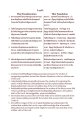
This Life Next Life
They have promised to do so, but they have neither come and told me, nor sent a messenger. This, Master Kassapa, is evidence to me that not one of those things exists.'
11. '
เนื้อหานี้สำรวจความเชื่อเกี่ยวกับหลังชีวิตและการมีอยู่ของพระเจ้า โดยเฉพาะพระเจ้าทั้งสามสิบท่าน การสนทนาระหว่างเจ้าชายและมาสเตอร์ Kassapa แสดงให้เห็นถึงแนวคิดที่ว่ายามที่มนุษย์คิดว่าเวลาได้ผ่านไปนาน บา
70
Exploring Beliefs and Opinions in Life and Beyond
This Life Next Life
68
' Even like the simile of the gamester, Prince, methinks is what you say. Renounce, Prince, this evil set of opinions, renounce them, I say ! Let them not be long a source of
In this passage, Prince Payasi grapples with the ideas of renouncing certain beliefs about existence and the afterlife as presented by Master Kassapa. Despite being advised to let go of detrimental op
72
The Journey of Value Exchange: Hemp Tales
This Life Next Life
70
There they saw a heap of hemp thrown away. Then one said to the other : " Here's a heap of hemp : do you make some into a bundle, I'll do the same and we'll carry it away."
In this engaging tale, two individuals discover various discarded hemp products during their travels through village streets. They strategize on how to optimize their loads, reflecting the relational